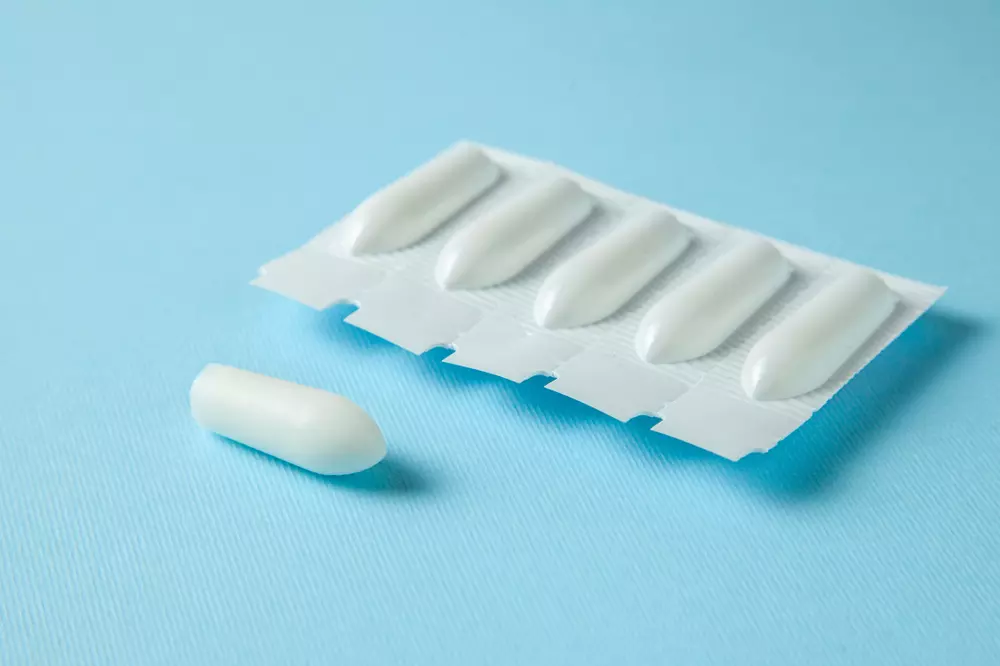
For patients who cannot access IV chelation therapy, prefer a non-invasive at-home alternative, or want to supplement their IV chelation between sessions, EDTA (ethylenediaminetetraacetic acid) suppositories are a commercially available option discussed in the community. EDTA is a chelator — a molecule that grabs onto metal like a claw so it can leave the body in urine. This approach is intended to provide slower, non-IV chelation during sleep, but it should still be reviewed with a clinician.
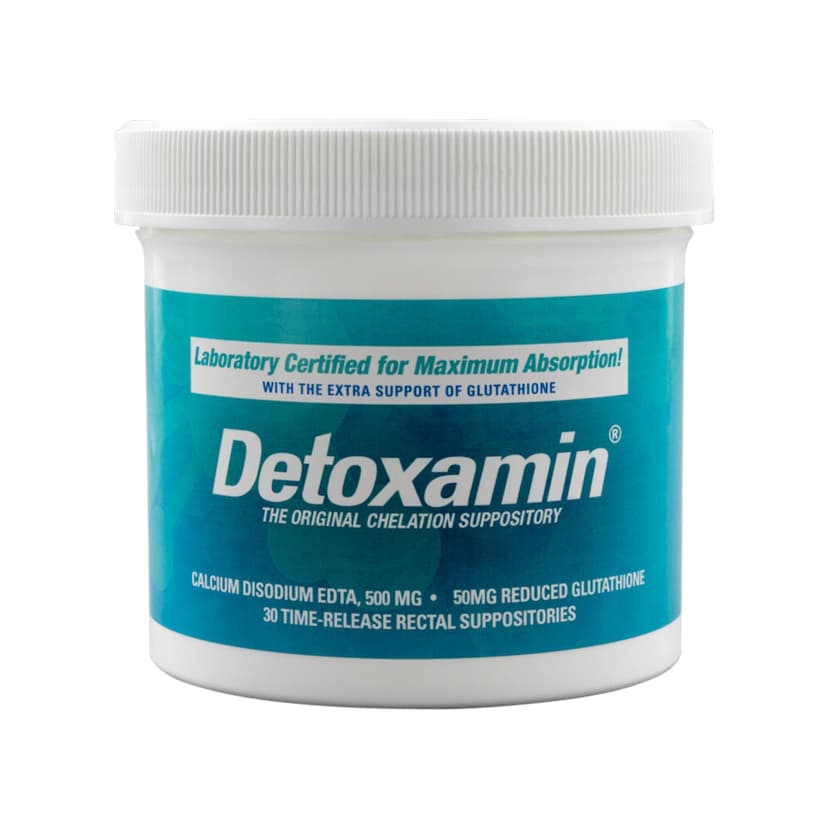
Detoxamin 500MG EDTA Suppositories with Glutathione
Detoxamin is marketed as an EDTA suppository with published studies cited by the manufacturer, and is reported by the company to have been used by clinicians worldwide. Product claims about absorption, tissue concentration, and outcomes should be interpreted with clinician guidance and in the context of your health status.
What the Product Is Marketed As
- •Marketed as a non-IV alternative to IV EDTA chelation, with manufacturer-cited absorption and tissue data
- •Non-IV route that may be easier for some patients to tolerate during sleep
- •Introduces EDTA differently than IV dosing and is marketed for longer-lasting exposure
- •May be better tolerated than IV therapy for some people, but still needs safety review
- •May reduce clinic time or cost compared with IV EDTA, depending on the treatment plan
What the Manufacturer Claims
Detoxamin's marketing materials list the claims below. None have been demonstrated for gadolinium, and EDTA's cardiovascular claims are not supported by current evidence — the largest trials were inconclusive or negative. We list them so you can recognize them as marketing, not as findings.
- •May help bind toxic metals while supporting reduced oxidative stress
- •May support vitality, energy, and general well-being for some people
- •May help protect cells, tissues, and organs from metal-related oxidative stress
Why Glutathione?
Glutathione is an antioxidant the body makes on its own, and factors such as aging and poor nutrition can lower it. Detoxamin's combination product (Calcium-Disodium EDTA + 50MG Reduced Glutathione) is marketed as supporting glutathione antioxidant status while also providing EDTA. Whether adding glutathione to EDTA does anything for gadolinium specifically has not been shown, and the combination should be reviewed with a clinician for interactions and timing.
The manufacturer sells this product directly: Detoxamin 500MG EDTA Suppositories with Glutathione. Talk to a clinician before ordering, not after.
Additional Resources
Patient Success Story: Eliminating Gadolinium Toxicity
A community member shares their experience with chelation therapy and recovery from gadolinium toxicity on r/GadoliniumToxicity
EDTA Chelation Information (edta.net)
Educational resource on EDTA chelation therapy, research, and clinical applications
Where to Go Next
Sources and Review
Author: Gadolinium.org Editorial Team (Patient-Led Education)
Last reviewed: April 12, 2026
How this page was reviewed: Reviewed against clinician-referenced chelation guidance and cited educational resources.
Clinician review: No physician has reviewed this page. It was checked by the editorial team against the sources listed below.
This page is for education only and is not a diagnosis or treatment plan.