Why Gadolinium May Act Like a Calcium Blocker in the Body
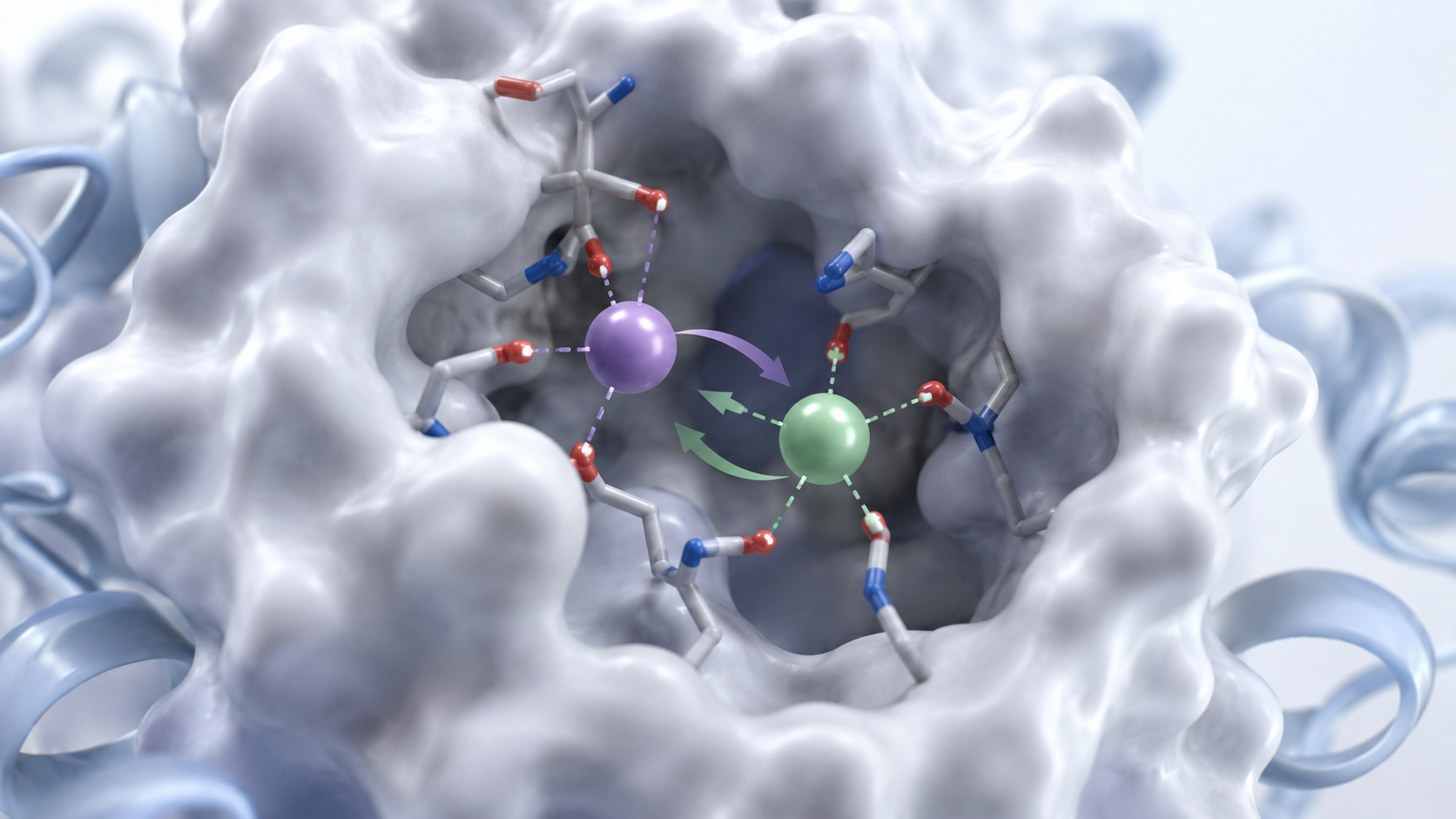
Gadolinium is close enough in size to calcium that it can fit into some places where calcium normally binds. The major difference is charge: calcium is Ca2+, while gadolinium is Gd3+. That stronger charge can make gadolinium grab on tighter and interfere with the calcium signal that was supposed to pass through.
Calcium is not just for bones. Cells use calcium channels and calcium-binding sites as on/off switches for nerve firing, muscle contraction, hormone release, cell division, and energy regulation. In research settings, scientists use gadolinium compounds specifically to block calcium-permeable channels. That channel-blocking effect is documented; the clinical question is how much it matters in a given person after MRI contrast exposure.
The key idea is that gadolinium may not need to be present in a large total amount to cause trouble if it reaches sensitive calcium-dependent sites. Tissues that rely heavily on fast calcium signaling may be affected first.
The Mechanism in Three Steps
1. Similar enough to fit
Gadolinium ions are close enough in size to calcium ions that they can occupy some calcium-binding environments.
2. Stronger electrical charge
Calcium carries a +2 charge. Gadolinium carries a +3 charge, which can make it bind more tightly to negatively charged sites.
3. Tighter binding can block the switch
Once gadolinium sits where calcium normally moves or binds, it may interfere with the on/off signals that cells depend on.
What Calcium Signaling Controls
Calcium channels are used across the body, but the symptoms people notice often cluster in tissues that depend on rapid signaling, constant repair, or high energy output.
Nerves
Calcium helps nerves fire and reset. When signaling is disrupted, people may describe tingling, pins-and-needles, burning skin, or brain fog.
Muscles
Muscle contraction and relaxation depend on calcium movement. Disrupted signals can overlap with twitching, cramps, spasms, or weakness.
Hair & Nails
Follicles and nails rely on constant cell division and calcium signaling. This may help explain why hair shedding and nail changes such as Beau lines are reported.
Energy
Mitochondria use calcium signals to tune energy production. Gadolinium-related cellular stress may contribute to deep fatigue in susceptible people.
What the Published Evidence Supports
The strongest support is mechanistic: gadolinium can block calcium-permeable channels in experimental systems, and chemistry studies show why calcium-like binding is plausible. Human symptom attribution is more complex, because retained gadolinium can exist in different chemical forms and many conditions can cause similar symptoms.
- Gadolinium chloride is used in lab studies to block mechanosensitive and stretch-activated ion channels.
- Human stem-cell research has used gadolinium to disrupt calcium signaling through stretch-activated calcium channels.
- Chemistry research shows rare-earth elements, including gadolinium, can replace calcium in some structured binding systems.
- Cell studies report gadolinium-based contrast exposure can stress human skin cells through autophagy and apoptosis pathways.
- Recent reviews discuss gadolinium retention, toxicity mechanisms, clinical manifestations, and nanoparticle-related hypotheses.
Why Small Retained Amounts May Still Matter
Total body burden is only one part of the question. A small amount in the wrong biochemical location may have an outsized effect if it blocks a high-value signal. The practical issue is whether retained gadolinium reaches calcium-dependent tissue sites in a form that can interact with those switches.
Location matters
Calcium channels sit at cell membranes and signaling hubs. Local concentration at those sites may matter more than a broad average measurement.
Chemical form matters
Chelated GBCA, released Gd3+, bound tissue deposits, and proposed nanoparticles may behave differently. This is why agent type and retention context matter.
Tissues differ
Nerves, muscles, hair follicles, nail matrix cells, and mitochondria are all calcium-sensitive, but they may respond differently across individuals.
Related Guides
Symptoms
Compare nerve, muscle, skin, hair, fatigue, and brain-fog patterns reported after GBCA exposure.
MRI Side Effects
Review immediate reactions, delayed symptoms, risk factors, and what to document after contrast.
Hair Loss Guide
Look at community-reported shedding patterns, nail changes, recovery timelines, and support ideas.
Contrast Agents
Understand linear vs macrocyclic agents, stability, retention, and transmetallation context.
Sources and Review
Author: Gadolinium.org Editorial Team (Patient education)
Last reviewed: July 1, 2026
Clinician review: No physician has reviewed this page. It was checked by the editorial team against the sources listed below.
This page is for education only and is not a diagnosis or treatment plan.
References
- Peer-reviewed studyParisi, Chandaria & Nowlan, Philosophical Transactions of the Royal Society B (2018) - GdCl3 used to block mechanosensitive ion channels
- Peer-reviewed studyNam et al., PLOS ONE (2017) - gadolinium used as a stretch-activated calcium-channel blocker in human MSCs
- Peer-reviewed studyYao et al., Journal of the American Chemical Society (2021) - rare-earth elements can replace calcium in binding structures
- Peer-reviewed studyWu et al., In Vivo (2022) - gadodiamide induced autophagy and apoptosis in human keratinocytes
- Peer-reviewed studyDomingo & Semelka, Archives of Toxicology (2025) - gadolinium toxicity mechanisms and clinical manifestations