Overview
There are several approaches discussed for addressing gadolinium in the body, including both detoxification support and medical removal methods. Chelation therapy uses drugs called chelators — molecules that grab onto metal like a claw and carry it out through your urine — while the IR (infrared) sauna/niacin protocol is a detoxification support approach. An additional emerging clinical-stage pharmaceutical approach is being developed for toxic heavy metals. Each approach works differently and may be suitable for different individuals depending on their specific circumstances, health status, and access to medical care.
It's important to consult with qualified healthcare professionals before beginning any detox protocol to ensure it's appropriate for your individual situation.
Before any of this
- 1.Confirm retention with a test. Symptoms alone can't tell you whether you are actually retaining gadolinium, and the approaches below all assume that you are. See the testing guide.
- 2.Find a clinician who knows gadolinium. Someone who can review your kidney function, medications, and labs before you start anything, and who can tell a side effect from a symptom. Find a doctor.
- 3.Then read the options below — so you're reading them with someone, rather than deciding alone.

IR Sauna / Niacin Protocol
The infrared sauna and niacin protocol, developed by Dan Root, is a natural detoxification method that combines the use of infrared sauna therapy with niacin (vitamin B3) supplementation. This protocol is designed to support toxin mobilization and elimination pathways, including for gadolinium, through enhanced sweating and improved circulation.
How It Works
- •Infrared Sauna: Uses infrared light to penetrate deep into tissues, promoting sweating and helping to mobilize stored toxins
- •Niacin: Acts as a vasodilator, increasing blood flow and helping to release toxins from fat cells and tissues
- •Combined Effect: The combination may support natural elimination pathways through sweat and improved metabolic processes
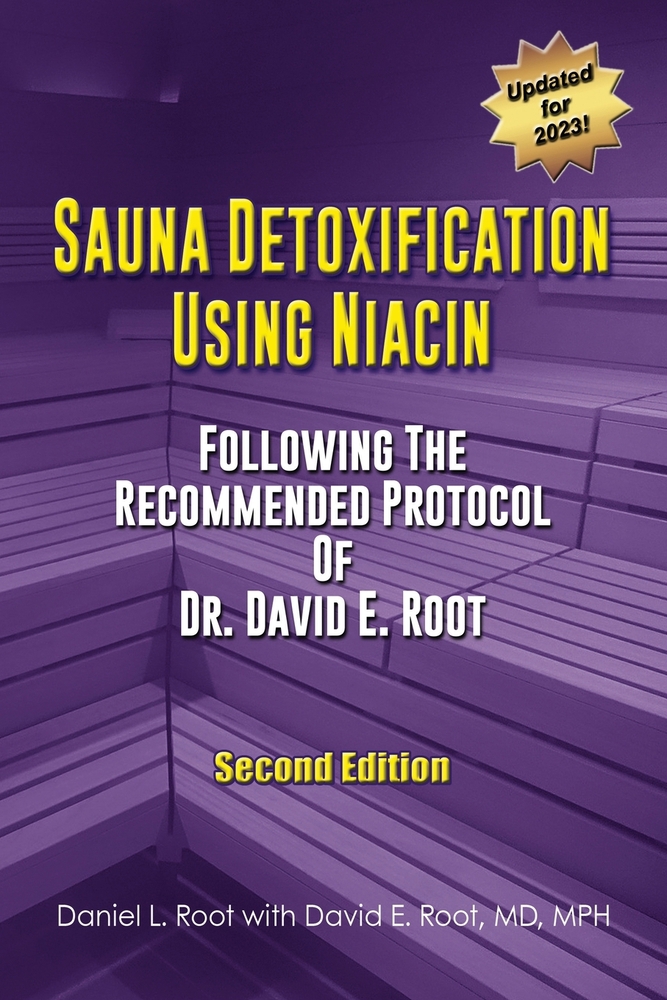
Learn More from Dan Root
Dan Root's book describes this protocol in detail, including doses. We don't reproduce those doses here because niacin dosing depends on your liver function and medications. If you're considering this, bring the book to your doctor rather than starting from it.
View Dan Root's BookAffiliate link — we may earn a commission. Profits are donated to gadolinium research (see About).
Join the Detox Community
Connect with others who are using the IR sauna and niacin protocol. Share experiences, ask questions, and get support from the Detox.iNation Facebook group.
Join Detox.iNation Group
Chelation Therapy (Removal Method)
Chelation therapy uses pharmaceutical chelators to bind gadolinium ions and facilitate their excretion through the kidneys. Two are named most often: DTPA (diethylenetriamine pentaacetate), the agent used in the clinical research on gadolinium, and EDTA (ethylenediaminetetraacetic acid), which binds gadolinium far more weakly. There are multiple chelation approaches discussed, from traditional IV therapy to non-IV products and emerging next-generation oral chelators.
Ca-DTPA and Zn-DTPA are two versions of the same drug. The calcium version pulls harder but strips more of your good minerals, so it's usually used once at the start; the zinc version is gentler and used for the rest.
IV Chelation (DTPA)
Medical standard using Ca-DTPA and Zn-DTPA via IV infusion under clinical supervision.
Self Chelation (Non-IV)
Non-IV EDTA suppositories with glutathione discussed as an at-home option, but still requiring clinician review.
HOPO-101 (Next-Gen)
Oral chelator with higher binding affinity in preclinical studies, currently in clinical trials.

Time and Natural Detox Pathways
It's important to understand that detoxification from gadolinium toxicity is a process that takes time. The body has natural detoxification pathways that can be supported through various supplements and natural substances. While these approaches may work more gradually than medical interventions like chelation therapy, they can be valuable components of a comprehensive detoxification strategy.
Supporting Natural Detoxification
Several natural substances have been identified as potentially helpful in supporting the body's natural detoxification processes for gadolinium toxicity:
- •Glutathione: A powerful antioxidant that plays a crucial role in the body's natural detoxification processes
- •ALA (Alpha Lipoic Acid): An antioxidant that may help support detoxification pathways and reduce oxidative stress
- •NAC (N-acetyl cysteine): A precursor to glutathione that may help boost the body's natural antioxidant capacity
- •Activated Charcoal/Zeolite: Natural binders that may help absorb and remove toxins from the digestive tract
- •Bentonite Clay: A natural clay that may help bind and remove toxins from the body
- •MCP (Modified Citrus Pectin): A form of pectin that may help bind heavy metals and support their elimination
Note: These natural detox pathways work gradually and may take time to show results. They are often used as supportive measures alongside other detoxification approaches.
Learn More About Natural Detoxification
For comprehensive information about these natural detox pathways, including detailed guidance on supplements, diet, lifestyle modifications, and other supportive approaches, visit our "What Helps" page. This resource provides extensive information about natural remedies and approaches for managing gadolinium toxicity.
View What Helps PageChoosing the Right Approach
The comparison below focuses on three main approaches that are currently available to patients: the IR sauna/niacin protocol (a detoxification approach), medically supervised chelation therapy (a removal method), and time with natural detox pathways. Emerging clinical-stage options like HOPO-101 remain investigational and are not standard treatments at this time.
IR Sauna / Niacin Protocol
- ⚠Done at home, which means no one is monitoring you — arrange clinician oversight and don't sauna alone
- ⚠High-dose niacin can injure the liver; sauna can cause fainting and dangerous blood pressure drops — both need a doctor's sign-off first
- ⚠Requires access to infrared sauna
- ⚠May take longer to see results
- ✓More cost-effective than chelation therapy
Chelation Therapy (Removal Method)
- ✓Direct binding and removal of gadolinium
- ✓Multiple options: IV DTPA (medical), EDTA suppositories (at-home), or future HOPO oral chelation
- ✓Can be more targeted and potentially faster
- ✓Non-IV products may reduce clinic time or cost for some patients when reviewed with a clinician
- ⚠IV chelation requires clinic visits; all chelation depletes minerals requiring supplementation
- ⚠IV chelation is expensive and typically not covered by insurance
Time & Natural Detox Pathways
- ✓Supports the body's own detoxification systems over time
- ✓Can include supplements like glutathione, ALA, NAC, and binders (e.g., charcoal, zeolite, bentonite clay, MCP) under medical guidance
- ✓Often more accessible and can be combined with lifestyle changes (sleep, hydration, nutrition)
- ⚠Works gradually and may take longer to see changes
- ⚠Supplement combinations can be complex and should be reviewed with a knowledgeable clinician
- ⚠Evidence is more limited and individualized compared with formal medical protocols
Emerging Clinical-Stage Treatment (HOPO-101)
HOPO Therapeutics is developing HOPO-101, a next-generation oral chelating agent with significantly higher binding affinity for gadolinium compared to DTPA in preclinical research. Unlike current IV chelation, HOPO-101 is being studied as an oral medication and may cause less mineral depletion. It is currently in clinical trials and not yet available for general use.
Note: HOPO-101 is strictly investigational and has not been FDA-approved. Patients should not seek it outside of properly conducted clinical trials and should continue working with their providers on currently available treatment options.
Where to Go Next
Chelation Guide
IV DTPA, self-chelation, and next-gen HOPO options
Supplements
Recovery supplements for chelation support and beyond
Testing Guide
Urine, blood, and hair analysis for gadolinium
Clinics
Facilities offering gadolinium chelation therapy
Doctors
Specialists treating gadolinium toxicity
What Helps
Diet, lifestyle, and daily support strategies
Sources and Review
Author: Gadolinium.org Editorial Team (Patient-Led Education)
Last reviewed: February 21, 2026
How this page was reviewed: Reviewed against physician-linked chelation guidance and cited educational resources listed on this page.
Clinician review: No physician has reviewed this page. It was checked by the editorial team against the sources listed below.
This page is for education only and is not a diagnosis or treatment plan.