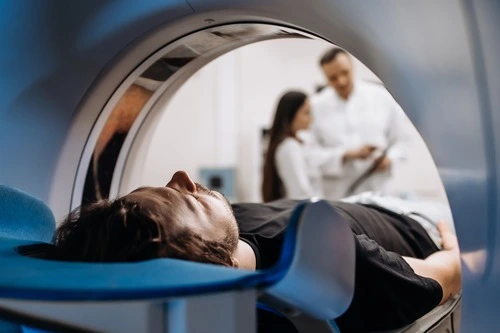
This page answers common questions about gadolinium-based contrast agents (GBCAs) used in MRI scans. Use it before an upcoming MRI, after new symptoms, or when you need a simple explanation to bring into a medical conversation.
Not sure where to begin?
Use Start Here for situation-specific paths: new symptoms, first 72 hours, doctor visit preparation, or questions to ask before an upcoming MRI.
About Gadolinium
Understanding gadolinium, GBCAs, and MRI contrast basics
What is gadolinium?
Gadolinium is a rare-earth metal used as a contrast agent in MRI scans. It is administered intravenously as part of a gadolinium-based contrast agent (GBCA) to improve image clarity. While it is generally excreted by the kidneys, research has shown that trace amounts can be retained in body tissues, including the brain, bones, and skin.
Why is gadolinium used in MRI scans?
Gadolinium enhances the contrast between different tissues during an MRI, making it easier for radiologists to detect abnormalities such as tumors, inflammation, and blood vessel issues. GBCAs are used in roughly 30-40% of all MRI exams worldwide. The contrast agent works by altering the magnetic properties of nearby water molecules, which brightens certain areas on the scan.
Is gadolinium safe?
For most patients, gadolinium-based contrast agents are considered safe and are widely used. However, a growing body of research and patient reports indicate that some individuals experience prolonged symptoms after exposure. The FDA has acknowledged gadolinium retention in tissues and required new warnings on GBCA labels. Patients with kidney disease are at higher risk for a serious condition called nephrogenic systemic fibrosis (NSF).
How common are gadolinium side effects?
Mild, short-lived reactions such as headache, nausea, and injection-site discomfort occur in roughly 1-5% of patients. More persistent symptoms associated with gadolinium retention are reported less frequently, though the exact prevalence remains debated. A 2025 survey of 316 people who reported symptoms after MRI contrast documented over 35 symptoms; 185 of them had laboratory-confirmed gadolinium retention and 131 were never tested.
What is a GBCA (gadolinium-based contrast agent)?
A GBCA is a compound that contains gadolinium ions bound to a chelating molecule, designed to be safely administered and excreted. GBCAs come in two main types: linear and macrocyclic. Macrocyclic agents hold the gadolinium more tightly and are generally associated with lower tissue retention. Common brand names include Dotarem, ProHance, Gadavist, Omniscan, and MultiHance.
Symptoms & Side Effects
Common symptoms, timelines, and conditions linked to gadolinium
What are the symptoms of gadolinium toxicity?
The most commonly reported symptoms include tingling and prickling sensations (79%), brain fog (72%), burning pain (69%), muscle twitching (69%), fatigue (65%), joint pain (61%), and deep bone pain (57%). These percentages come from the 185 participants with laboratory-confirmed gadolinium retention in a 2025 survey of 316 people who reported symptoms after MRI contrast. It is self-reported data, not a controlled study. Visit our symptoms page for a full breakdown of over 35 documented symptoms.
How long do gadolinium side effects last?
Side effects can persist for months to years. Some patients report improvement over time, while others experience chronic symptoms. In published surveys, patients have shown laboratory-confirmed gadolinium retention for up to 22 years after their last MRI. Recovery timelines vary widely and may depend on the type of GBCA used, the number of exposures, and individual health factors.
Can gadolinium cause brain fog and cognitive issues?
Yes, brain fog and cognitive difficulties are among the most frequently reported symptoms, affecting approximately 72% of surveyed patients with confirmed gadolinium retention. Patients describe difficulty concentrating, memory problems, and mental fatigue. Research has confirmed that gadolinium can cross the blood-brain barrier and deposit in brain tissue, particularly the dentate nucleus and globus pallidus.
Can gadolinium cause hair loss?
Hair loss is reported by approximately 35% of patients in published gadolinium toxicity surveys and up to 50% in early-phase NSF cases. Community reports from over 400 replies indicate that hair loss can begin within days to weeks of MRI contrast exposure. Many patients report improvement over 3-12 months. Learn more on our gadolinium hair loss page.
What is Gadolinium Deposition Disease (GDD)?
Gadolinium Deposition Disease is a term used for persistent symptoms reported after MRI contrast agents in patients with normal kidney function, where gadolinium retention is suspected or documented. Whether retained gadolinium causes these symptoms is still under research. The term was introduced by Dr. Richard Semelka and colleagues. GDD is distinct from nephrogenic systemic fibrosis (NSF) — a rare scarring disease of the skin and organs that occurs primarily in patients with severe kidney disease, and where gadolinium is established as the cause. GDD is described by symptoms that develop within hours to weeks after GBCA administration.
Testing & Diagnosis
How to test for gadolinium retention and interpret results
How can I test for gadolinium in my body?
The most widely used test is a 24-hour urine collection, which measures the amount of gadolinium being excreted by the kidneys. Provoked (chelation-challenge) testing, where a chelating agent is given before collection, may show higher levels. Some specialty labs also offer blood serum testing. It is important to work with a knowledgeable physician who can interpret your results in context.
What is a 24-hour urine gadolinium test?
A 24-hour urine test collects all urine produced over a full day, which is then analyzed for gadolinium content by a laboratory such as Doctor's Data or Mayo Clinic Metals Panel. Results are typically reported in micrograms per liter. Detectable gadolinium in urine long after your last MRI suggests ongoing excretion and possible tissue retention.
Can a regular blood test detect gadolinium?
Standard blood panels do not test for gadolinium. You need a specialized heavy metals test ordered through a lab that specifically includes gadolinium in its panel. Some functional medicine doctors and toxicologists routinely order these tests. Visit our blood test guide for more information on testing options.
What gadolinium levels are considered concerning?
Any detectable level of gadolinium in urine collected more than 96 hours after the last GBCA administration is considered evidence of retention. Higher levels and longer time since exposure generally indicate more significant retention. Interpretation should always be done with a healthcare provider familiar with gadolinium toxicity, as reference ranges and clinical significance can vary by lab.
Treatment & Recovery
Chelation, supplements, and recovery approaches
How can gadolinium be removed from the body?
The primary medical approach to gadolinium removal is chelation therapy, most commonly using Ca-DTPA or Zn-DTPA, which bind to free gadolinium and facilitate its excretion through the kidneys. Some patients also explore supportive approaches like sauna therapy, antioxidant supplementation, and dietary changes. Visit our detox page for a fuller look at approaches patients discuss and the safety issues to consider.
What is DTPA chelation therapy for gadolinium?
DTPA (diethylenetriaminepentaacetic acid) is a chelating agent that binds to gadolinium ions and helps the body excrete them through urine. Ca-DTPA and Zn-DTPA are administered intravenously, typically in a clinical setting. It is considered the most targeted chelation approach for gadolinium. Treatment protocols vary, but many clinicians use a series of infusions over weeks to months.
Does chelation therapy work for gadolinium removal?
Many patients report symptom improvement with chelation therapy, and post-chelation urine tests typically show increased gadolinium excretion. However, responses vary significantly between individuals. Some patients experience temporary symptom flares during treatment. Chelation should only be undertaken with medical supervision from a provider experienced in gadolinium toxicity.
How long does recovery from gadolinium toxicity take?
Recovery timelines vary widely. Some patients report improvement within 6-12 months, while others have symptoms for years. The number of GBCA exposures, agent type, kidney function, other health conditions, and treatment choices may all matter. Our community and doctors pages can help you find support and clinician leads.
What supplements may help with gadolinium recovery?
Community members commonly discuss magnesium, glutathione, vitamin C, selenium, N-acetylcysteine (NAC), and probiotics. These are not cures, and the right choice depends on medications, labs, kidney function, and whether you are doing chelation. Talk with a healthcare provider before starting a supplement plan. Visit our What Helps page for community-reported approaches.
Still have questions?
Open a practical guide, prepare records, or connect with people sharing patient-led support.
Sources and Review
Author: Gadolinium.org Editorial Team (Patient-Led Education)
Last reviewed: April 5, 2026
How this page was reviewed: Compiled from published research, FDA communications, and community-reported experiences. This page is for educational purposes only.
Clinician review: No physician has reviewed this page. It was checked by the editorial team against the sources listed below.
This page is for education only and is not a diagnosis or treatment plan.
References
- Regulatory guidanceFDA Drug Safety Communication: Gadolinium-based Contrast Agents
- Patient survey dataSigns & Symptoms after Gadolinium Administration: Patient Survey (2025)